 Vet Amica
Making vets’ lives easier
Pet lab results, explained in plain English
Owners rarely remember their pet’s lab results after hearing them once. Vet Amica gives them something to take home, show the family, and use to decide what happens next.
What kind of report are you explaining?
Pick one to begin. The upload box appears once you choose.
Cells, tissue & fluids
Including cytology & histology, fluid washes and CSF analysis.
Blood / urine
A full range of blood and urine tests.
Imaging
Radiographs and ultrasound images.
The screen a vet opens. Everything else happens after one of these is chosen.
What already happens
A vet’s life is already busy enough without having to report lab results.
Every set of results that comes back is a conversation that has to happen, and there is rarely a good time for it. What follows is familiar in every practice.
- Ten minutes on the phone for every set of results
- A detailed voicemail, and the call back before the phone is down
- Explaining it again to a partner or an adult child who wasn’t there
- Translating as you go (azotaemia, neoplasia, left shift) without sounding like you are talking down to anyone
- Nothing written down, so no record of what was actually explained
- Writing the estimate by hand afterwards and emailing it separately
- Owners turning to an AI chatbot instead, and getting an answer nobody clinically responsible has checked
The Competition and Markets Authority found the same thing about cost information in particular. More on that below.
As the laboratory writes it
Marked elevation in total T4 is consistent with hyperthyroidism in a patient of this signalment. Note that hyperthyroidism increases glomerular filtration rate and may mask concurrent renal insufficiency.
As it goes home
Marmalade’s thyroid is overactive, which is common in older cats and treatable. Because that can hide early kidney change, we will recheck those two numbers once she is settled.
Same finding, same numbers. Every value appears exactly as the laboratory reported it, carrying the laboratory’s own high and low markers. Marmalade and her results are fictional, shown for demonstration.
The part that cannot be switched off
The software drafts. The vet decides.
A vet always has to approve the report before an owner sees it. There is no version of this product where that step is skipped, and no setting that turns it off.
Everything is editable: every line, every value, every box. You decide how much of the report the owner sees and how much stays out of it. Additional safety measures highlight wherever a medication or a cost is mentioned in the report or in your clinical notes; the tool never invents either. The vet is in charge.
-
01
The report goes in
Any laboratory or imaging report, plus your own notes if you have them. Vet Amica drafts an owner summary, usually in under a minute.
-
02
You read it and change what you want
It arrives as a draft, not an answer. Rewrite any line, cut anything that does not apply to this animal. The clinical judgement stays where it belongs.
-
03
You approve, and only then does it send
Nothing reaches an owner without a veterinary surgeon approving it. The step is in every price level, it is never charged for, and it cannot be turned off.
What goes home
One sheet the owner can actually read
It answers four questions in the order an owner actually asks them, with the results set out alongside in plain English. It is the thing they read again at home when they have stopped listening in the consulting room.
- 1
What was checked
Which body systems the panel covered, and how many measurements it came to.
- 2
What the results showed
How many values sat inside the laboratory’s range, and which ones did not.
- 3
What this means for the animal
The findings read against this patient’s history, not a condition in general.
- 4
What happens next
The sensible next step, what to watch for at home, and when to get in touch.
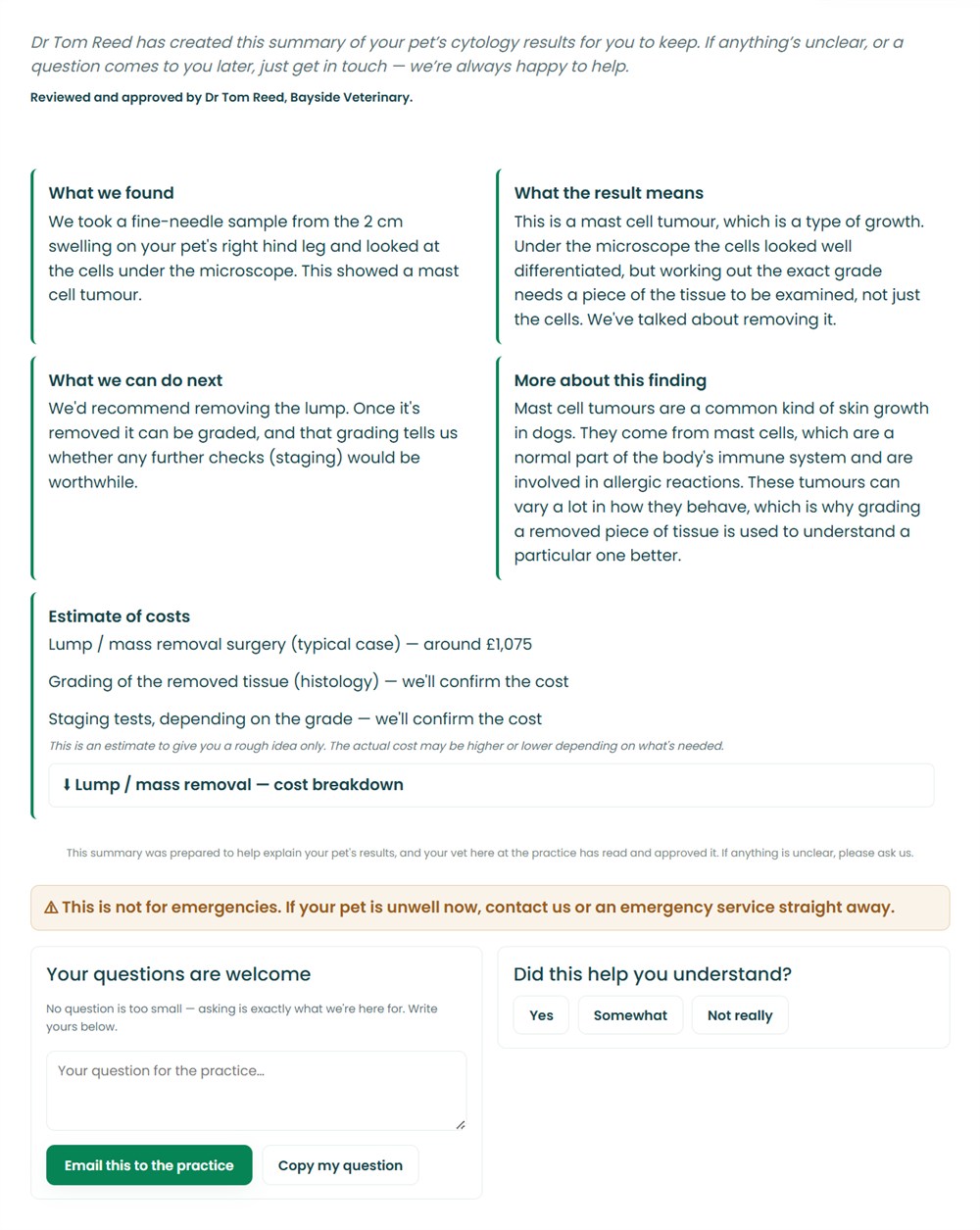
You decide what else goes with it.
- The original laboratory report itself, if you want to send it
- Every blood and urine value, exactly as the laboratory reported it, with a plain-English name and description beside each one
- X-ray and ultrasound images, with your own written explanation under each one
- Estimates for possible next tests or treatments, priced from your own list
- A full price breakdown for bigger procedures, such as a lump removal
- Condition handouts for the owner to take away
Costs, itemised from your own price list
A number on its own looks expensive. The same number, broken down, looks reasonable. Vet Amica picks up the procedures mentioned in the notes and adds an estimate drawn from the prices you gave it.
Labelled as a rough guide, never as a quotation.
Every report type, not just bloods
- Blood and urine
- The everyday work of any practice
- Cytology
- Cells, usually from a lump
- Histology
- Tissue, usually after surgery
- Fluid samples
- Including spinal fluid
- Imaging
- Radiographs and ultrasounds
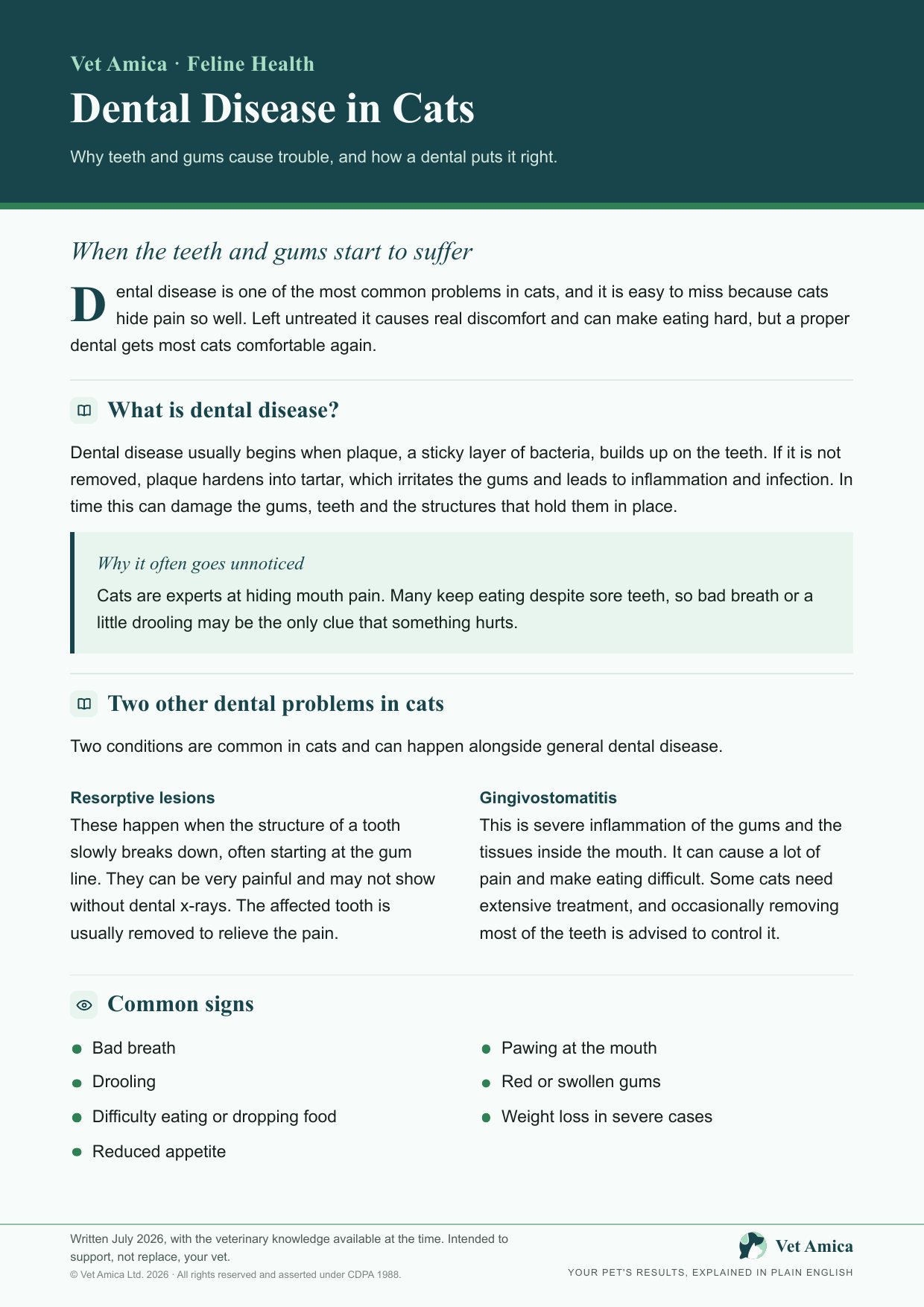
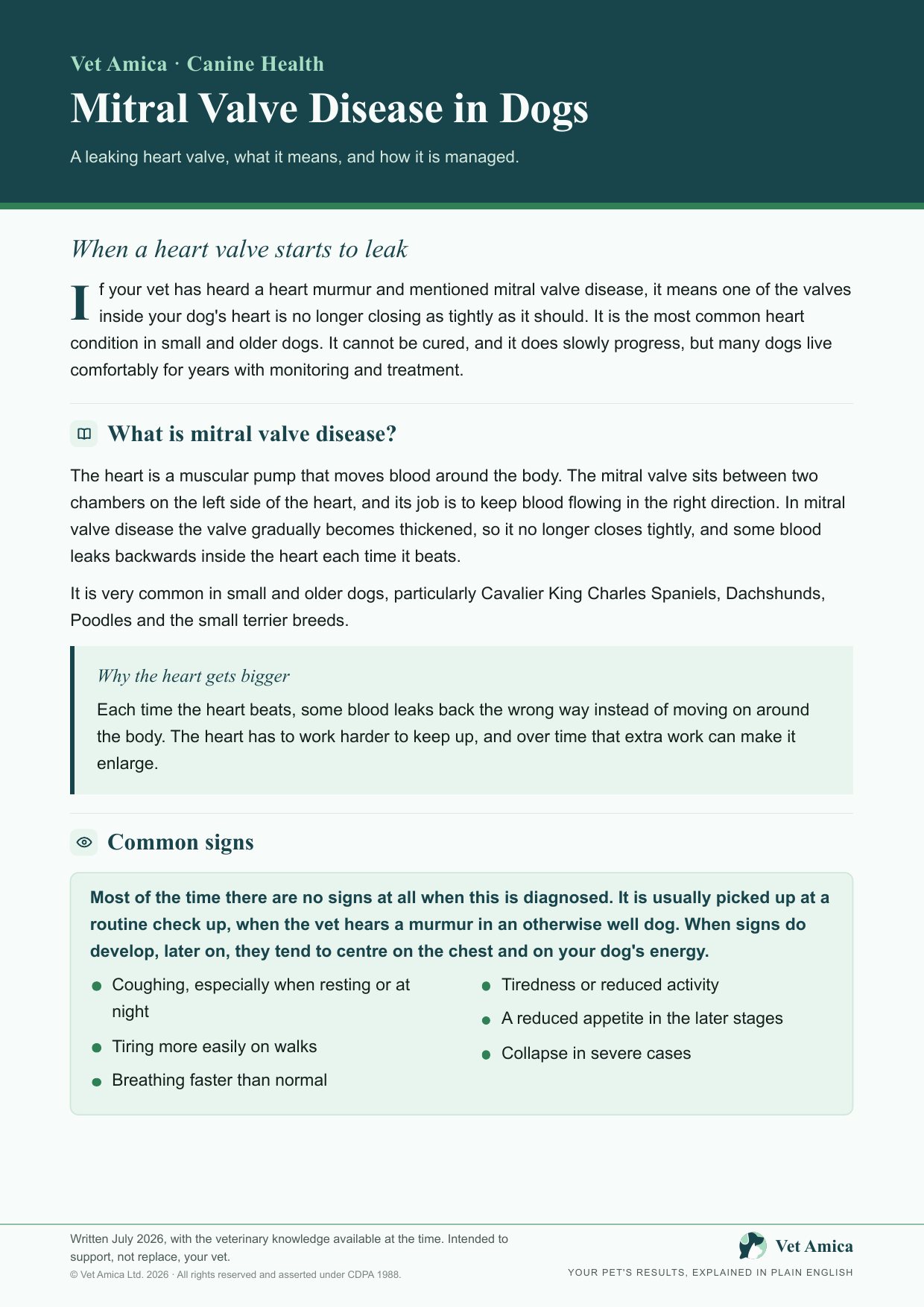
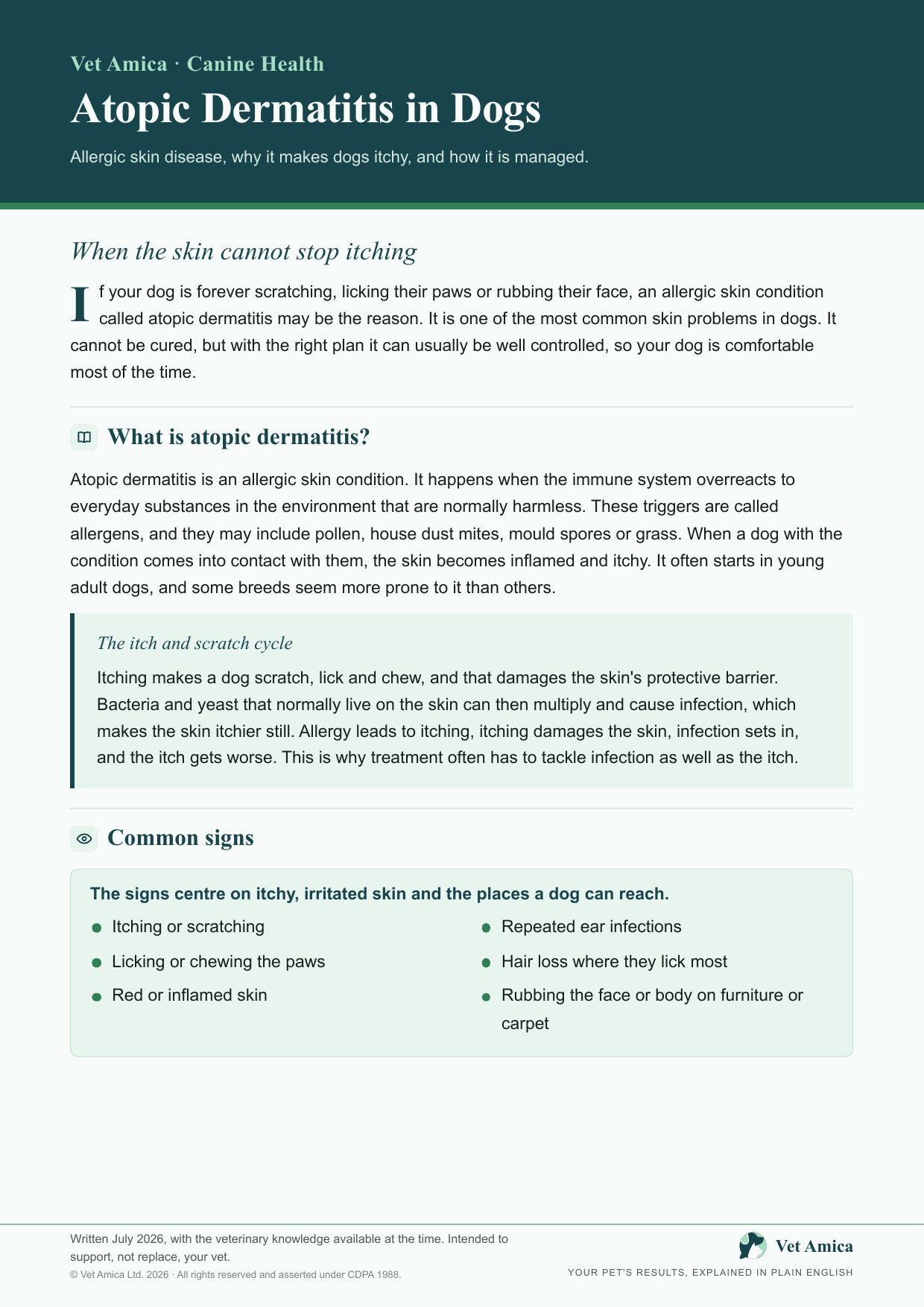
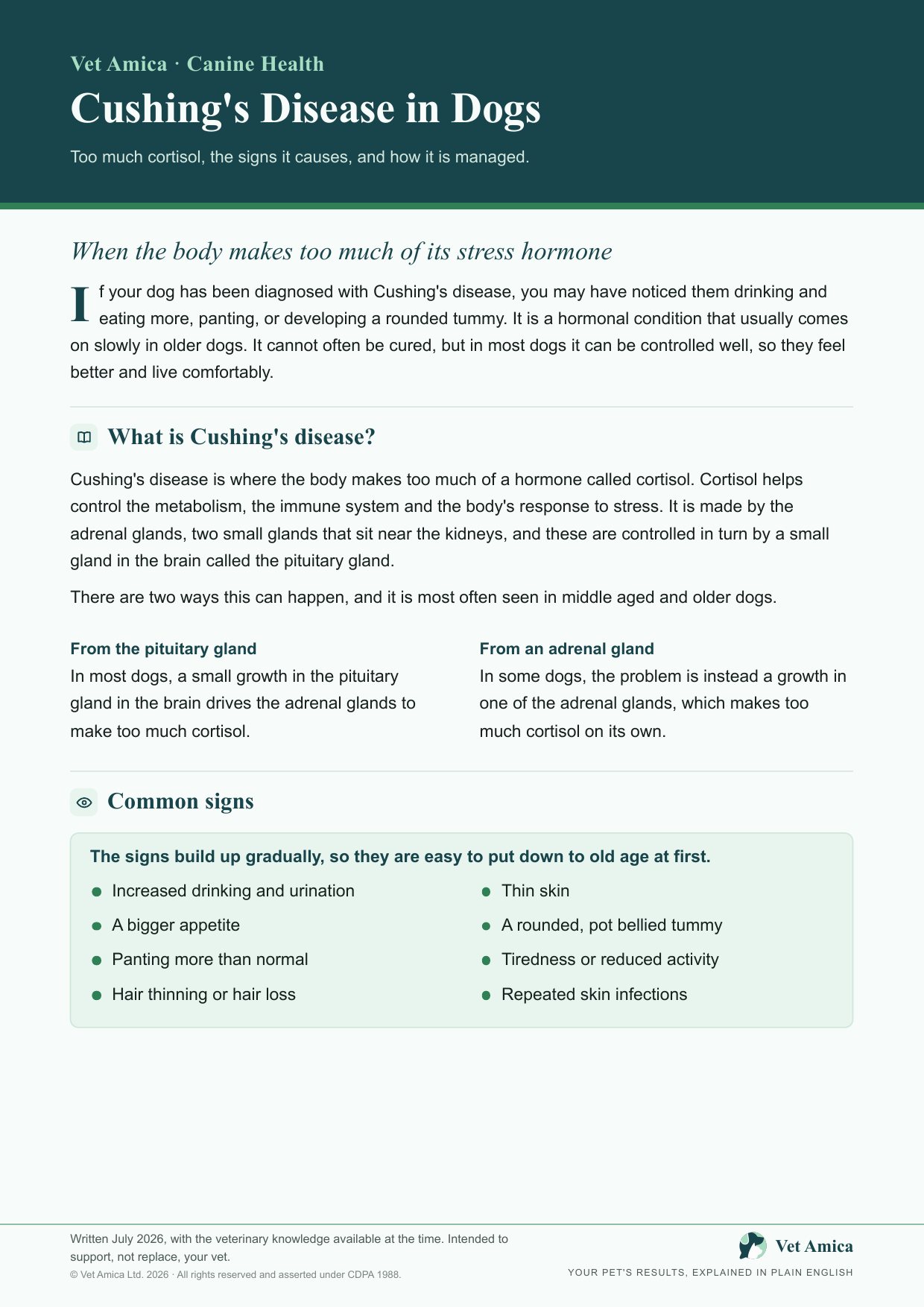
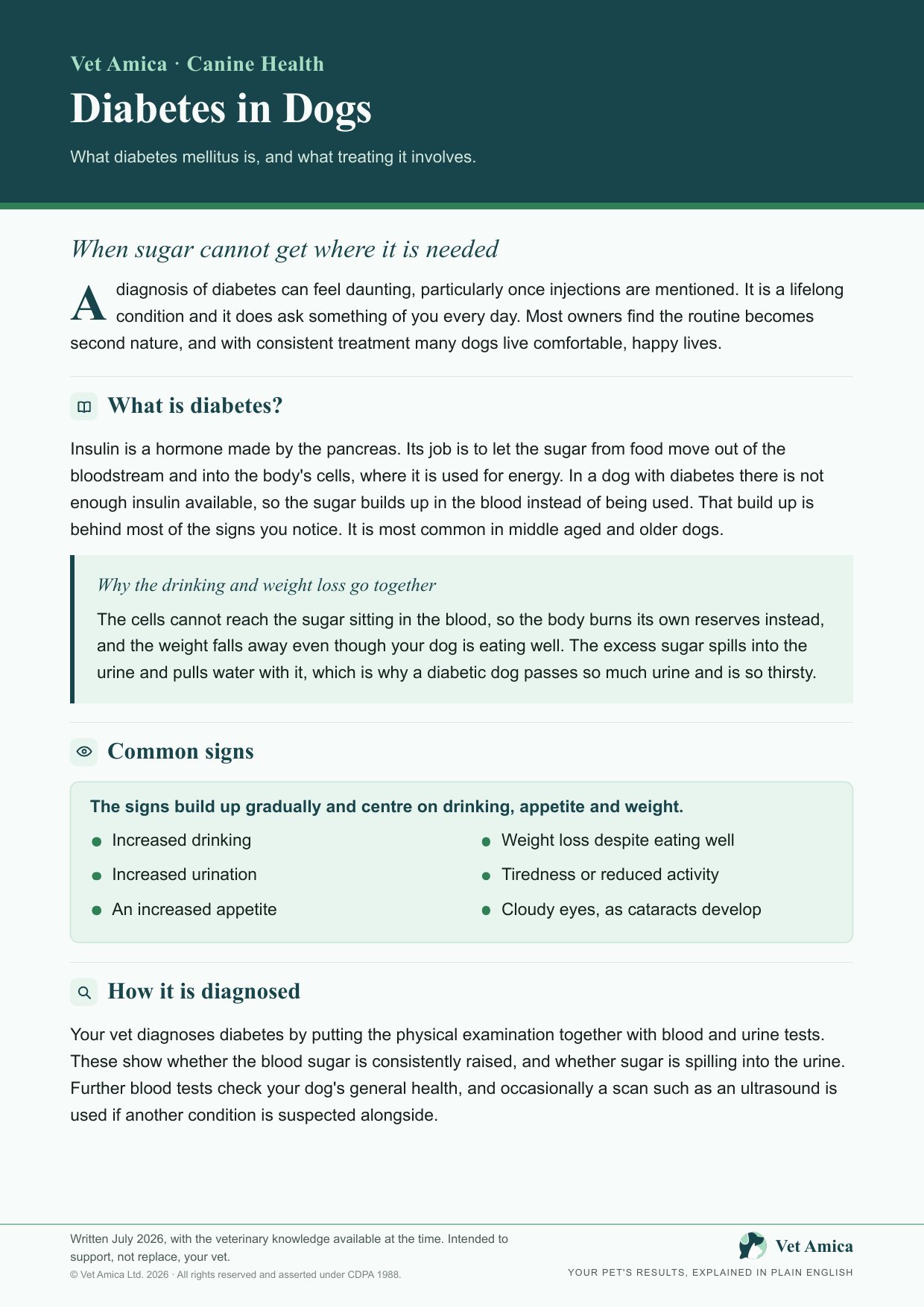
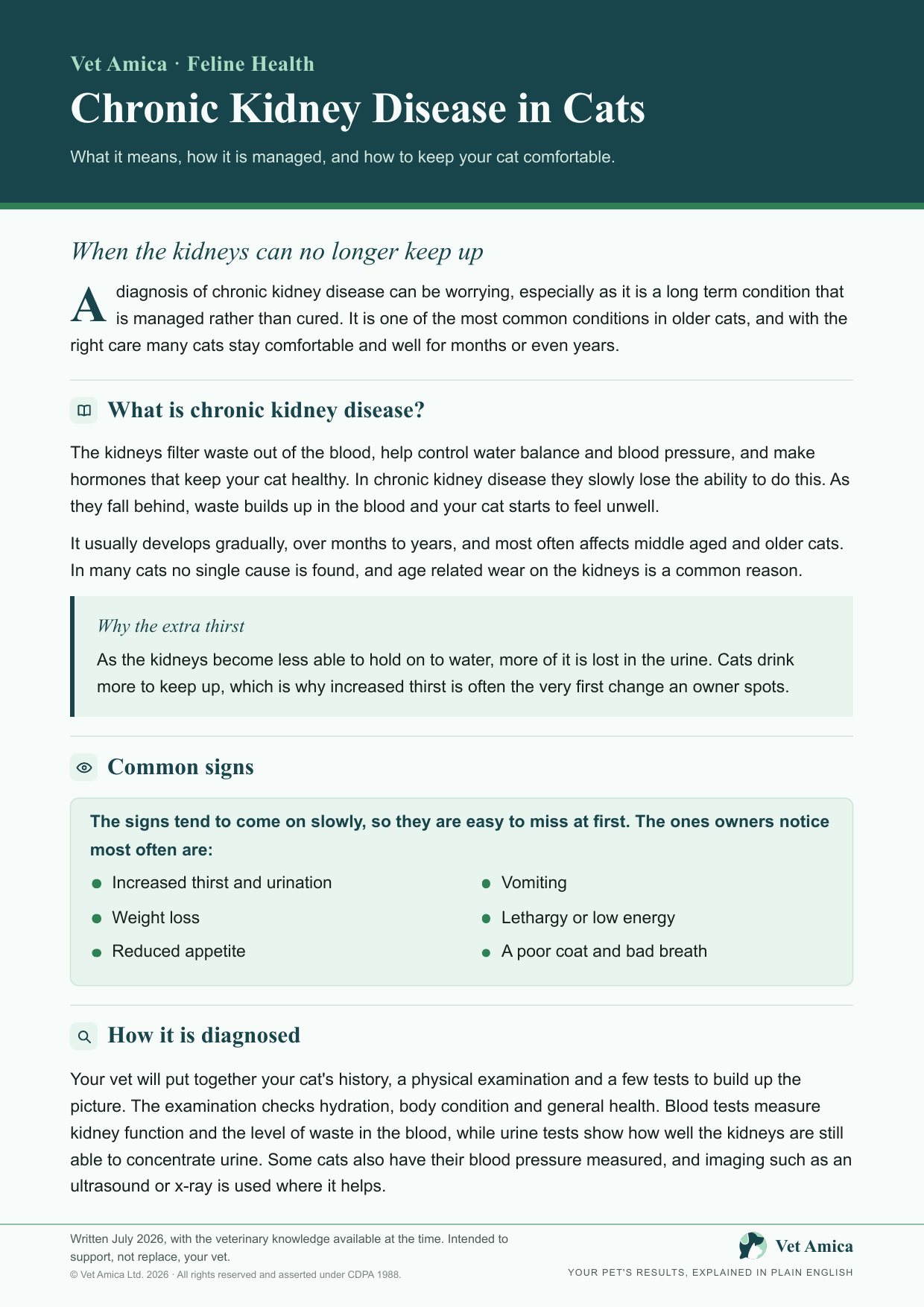
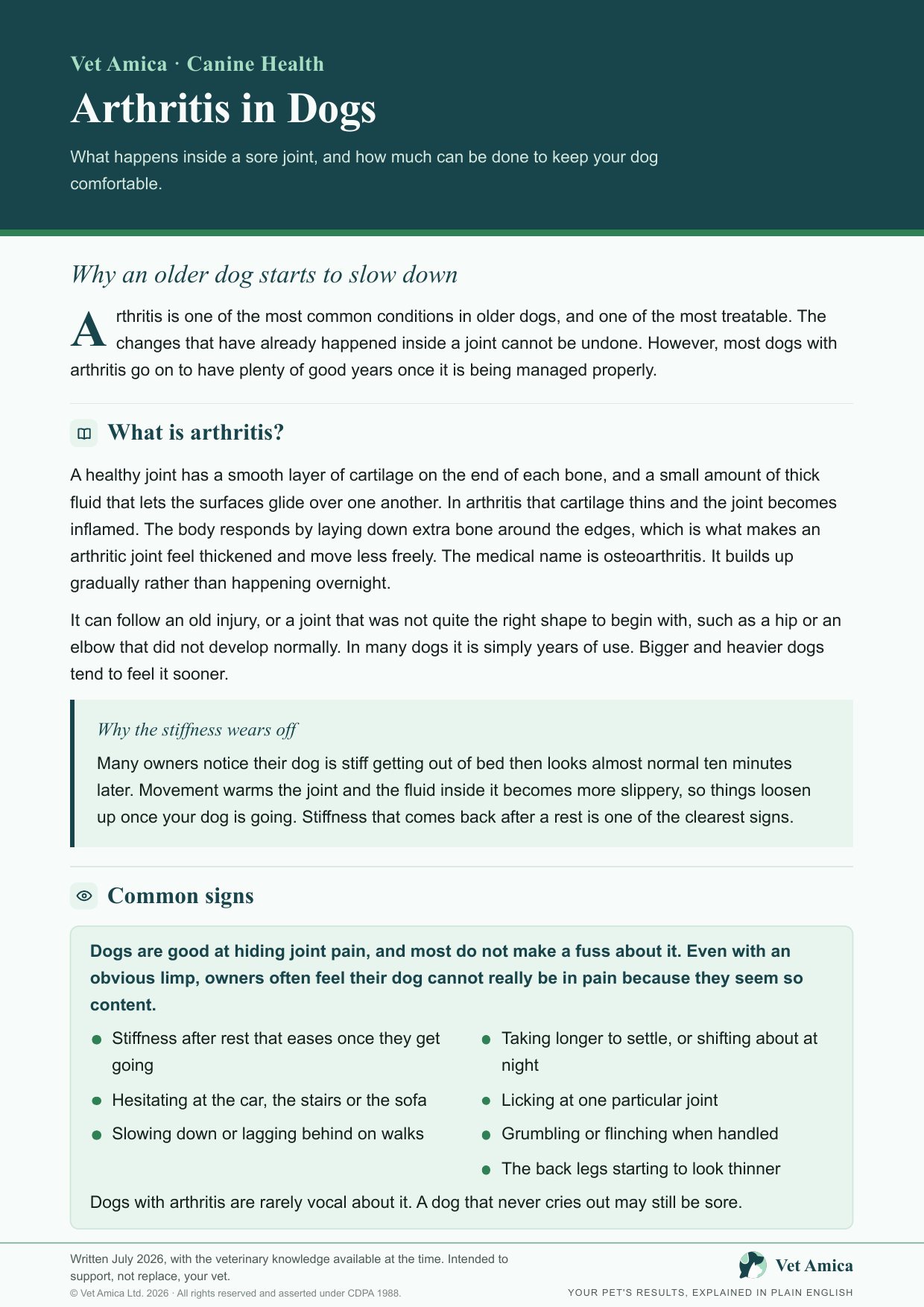
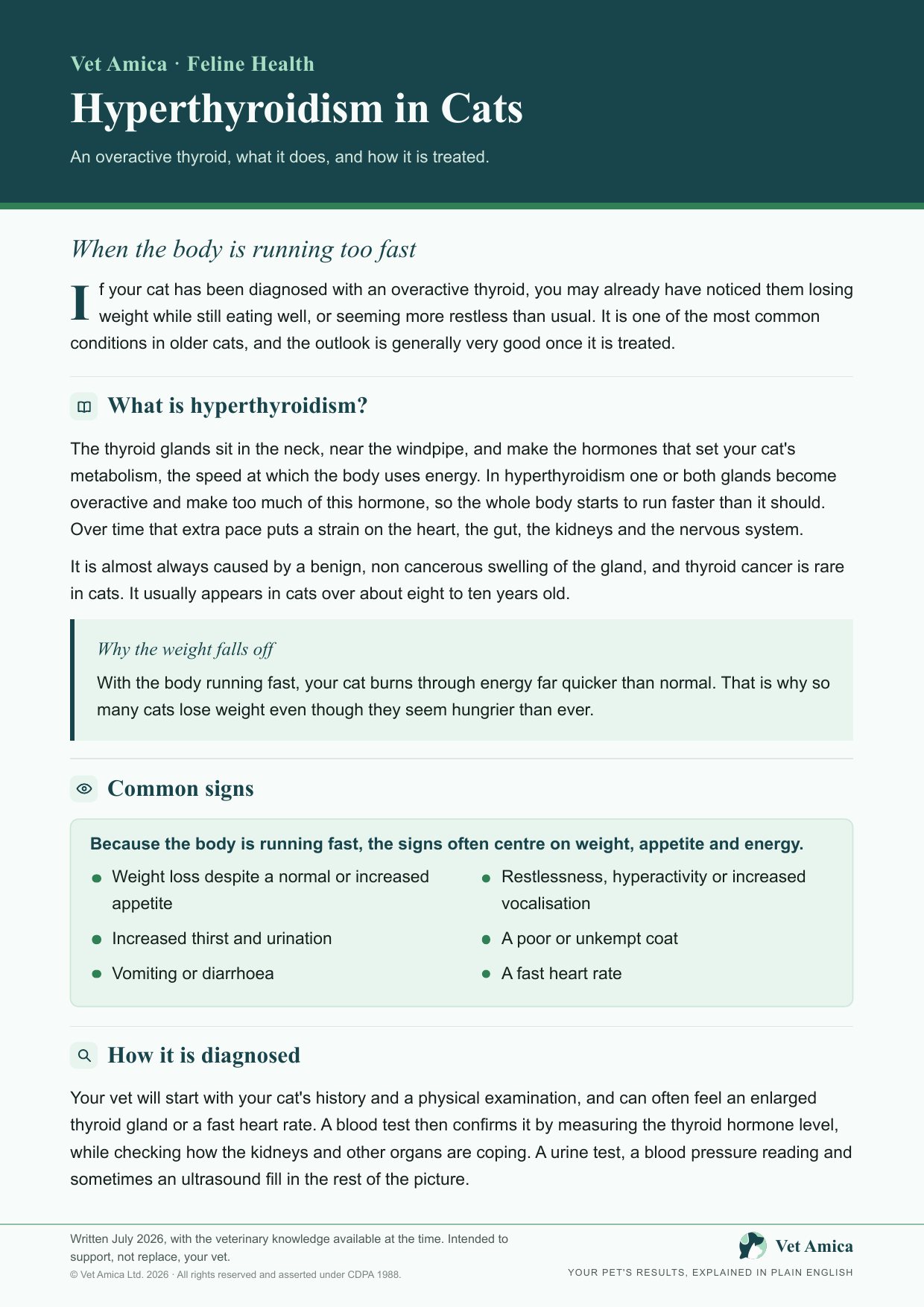
Twenty-five condition sheets to open with, and new ones released all the time. Every one written by a practising vet.
Why now
The Competition and Markets Authority spent 2025 and 2026 investigating the veterinary industry. Its central finding was that pet owners are not getting information they can actually use, particularly about treatment options and prices.
Vet Amica helps a practice give owners clear, itemised price estimates, and helps owners feel they understand what has been found, so the decisions they make are informed ones.
How the estimates are built
You tell the system what things cost at your practice: a routine blood profile, a dental, a lump removal. When a procedure comes up in the notes, the tool adds it to an estimates box on the owner’s sheet. You can edit that box or remove it. For bigger procedures you can upload your own detailed breakdown and attach that too.
Your notes, and your shorthand
The draft is better when it has your clinical notes alongside the report, because it is then written around this animal’s history rather than the numbers on their own. You can also keep an abbreviations list for your own practice, so the shorthand you type every day is read the way you meant it rather than guessed at.
The founding rate
Any practice that joins in our first six months gets a significantly reduced rate for their first year.
“Every day I am balancing the same two things: finding ten minutes to ring each owner about their pet’s blood results, being careful about every word I use, and then finding time later to write up an estimate and email it out. This is a tool designed by a vet, for vets. It saves us time, and it gives owners a far better experience.”
Dr Isaac Stevenson BVMSci MRCVS
Founder and director · still in clinical practice
FAQs
Who is responsible for what the owner is told?
The vet who approves it, the same person who is already responsible for the conversation they would otherwise have had on the phone.
That is the design rather than a technicality. The approving vet knows the animal, the case and the owner, and nothing goes out that they have not read.
Does it decide whether a result is normal or abnormal?
No. Every value appears exactly as the laboratory reported it, carrying the laboratory’s own high and low markers. The plain-English name and description for each test comes from a fixed list we maintain and check.
The written summary is a draft. The markers are the laboratory’s.
What actually happens to the report when I put it in?
The text of the report, including the values, is sent securely to the AI service that produces the draft. That is what allows the summary to talk about the actual result in front of you rather than a generic description.
The AI provider’s commercial terms mean content submitted this way is not used to train their models. Any x-ray or ultrasound images you add stay in your browser and are never sent to the AI at all.
Does it work with our practice management system?
It works alongside whichever system you use rather than replacing anything. You paste the report in, or drag the laboratory’s PDF onto the page. There is nothing to install and no integration to arrange with your software provider.
Which laboratories does it work with?
All of them. It works from the report itself rather than from a connection to any particular laboratory, so an in-house analyser printout and an external laboratory report are handled the same way.
Which animals does it work for?
Dogs and cats. The plain-English descriptions, the condition sheets and the medicine checks are all written for those two, so they are the only animals the tool offers.
What kinds of result can it handle?
Blood and urine, cytology, histology, fluid samples and imaging (radiographs and ultrasounds).
How long does it take?
The draft arrives in under a minute. How long you then spend reading and editing is up to you. The majority of reports need very little.
Where do the cost estimates come from?
From your own price list, which you give the system once. When a procedure is mentioned in the report or your notes, it is added to an estimates box on the owner’s sheet. You can edit that box or take it out entirely.
The tool only ever uses a figure you have supplied. It never invents one, and estimates are labelled as a guide rather than a quotation.
Who wrote the condition handouts?
A practising vet, the same one who built the product. Every sheet is written for the owner to take away and read at home, and new ones are added all the time.
When can we have it?
Vet Amica opens to practices in early 2027. Any practice that joins in our first six months gets a significantly reduced rate for their first year.
Email us and we will tell you what it costs before anyone else.
Vet Amica opens to practices in early 2027.
If you’d like to know when, and what it costs, send us an email.
Get in touch
hello@vetamica.co.ukWritten and answered by the vet who built it. We use your message to reply to you and nothing else — see our privacy notice.